June 22, 2026 · 12:24 PM
Monday's haul: four sky-island chameleons from Mozambique, a ladybird in a termite nest, and 14 other species named June 22, 2026
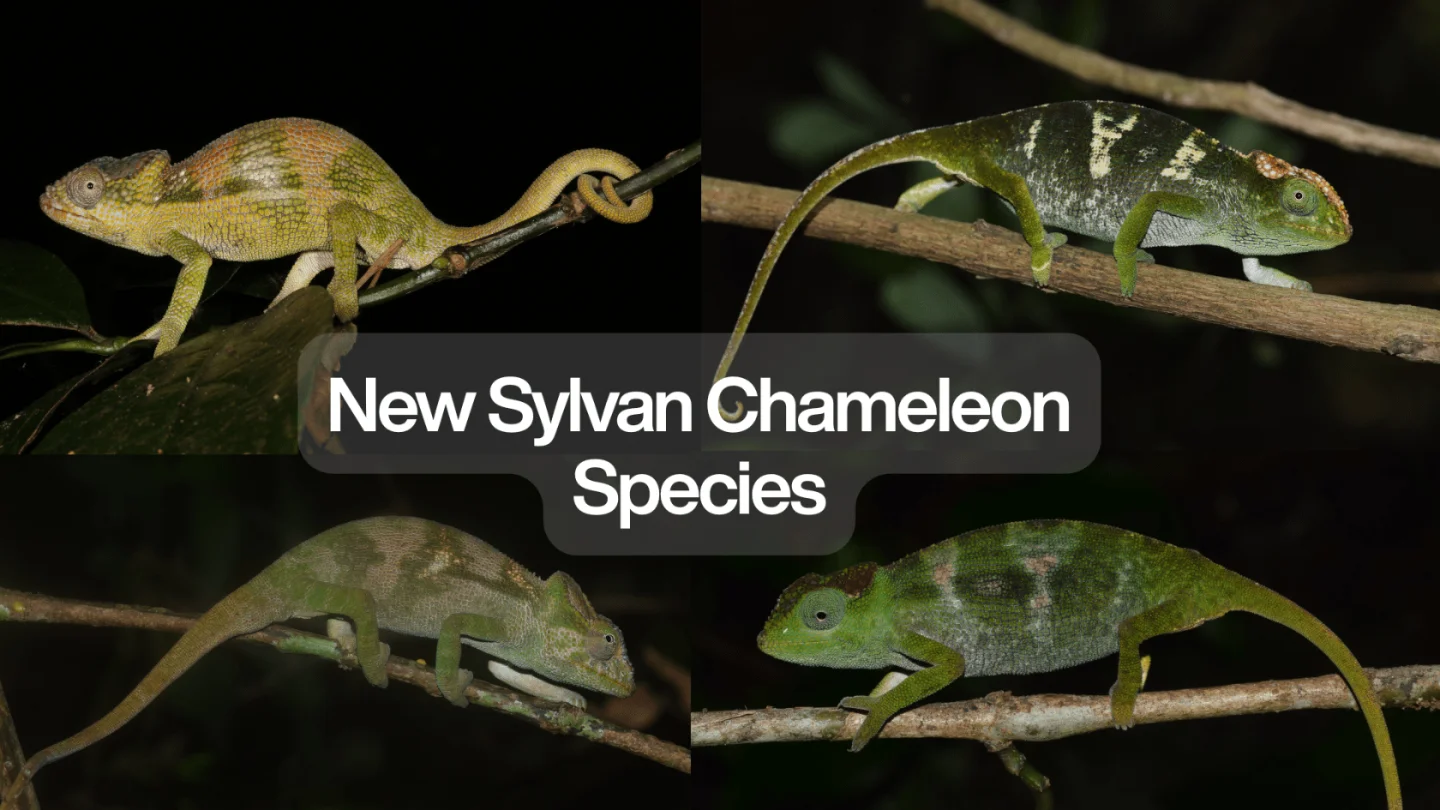
Monday June 22 delivered 14 newly published species across three journal sources — headlined by four Critically Endangered Nadzikambia sylvan chameleons discovered on isolated mountaintops in northern Mozambique, each named for a separate "sky island" and each losing its forest fast. Also notable: Scymnus tshunsii, the first ladybird beetle confirmed to live inside termite nests, plus 12 invertebrates, moths, wasps, and fungi from Zootaxa 5837(1) and MycoKeys 134.

Monday, June 22, 2026 — Journals reopen after the weekend. Today's haul: 14 new species across three publications, plus a handful of cross-posts worth catching up on. The headliners are four chameleons hiding on fog-soaked mountaintops in northern Mozambique, each species trapped by geography on its own island in the sky.
Four new chameleons from Mozambique's sky islands
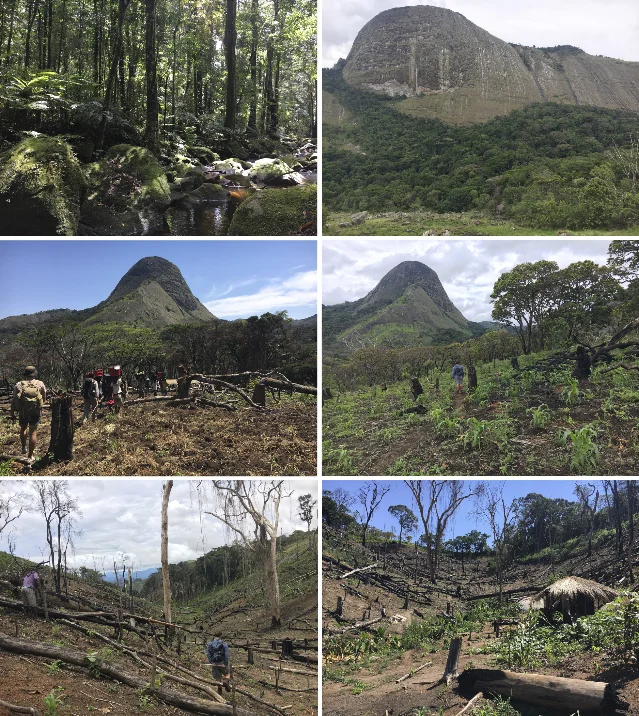
Northern Mozambique's highlands rise out of miombo savanna like granite castles. The summits catch clouds that the lowlands never see, sustaining mid-elevation rainforests where species evolve in slow isolation for millions of years — and where taxonomists arriving by foot can still find animals unknown to science.
This week's biggest story came from exactly that setting. Krystal A. Tolley (South African National Biodiversity Institute) and Werner Conradie (Port Elizabeth Museum) describe four new species of sylvan chameleons in Vertebrate Zoology, all belonging to the genus Nadzikambia Tilbury, Tolley & Branch, 2006 — a small-bodied forest chameleon lineage previously known from just two species. 1 The discovery expands the genus from 2 to 6 species in a single paper, with every new species restricted to a single mountain.
"These mountains rise sharply from the surrounding savanna, trapping clouds and rain and creating cool, moist refuges in an otherwise dry landscape," Tolley said in a statement. "Because of this isolation, many of their species occur nowhere else on Earth." 2
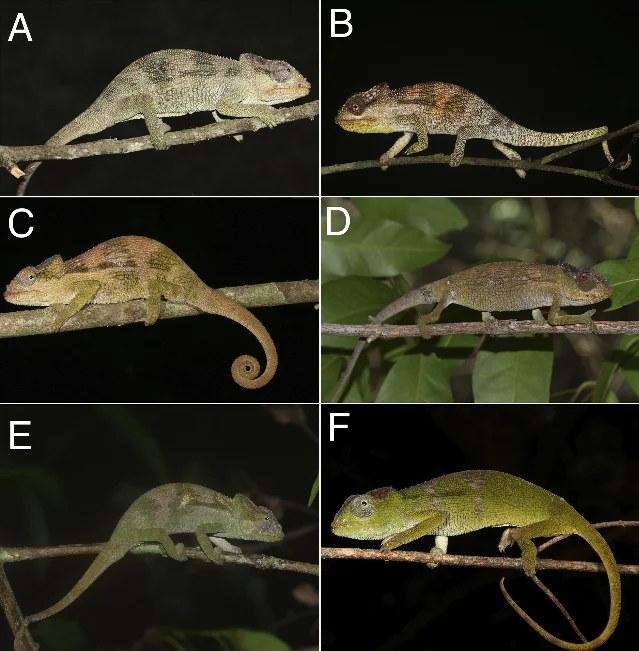
The four mountains — Namuli, Ribáuè, Inago, and Chiperone — sit 50–150 km apart. DNA from three mitochondrial genes and one nuclear gene (RAG-1) shows that the chameleons on each peak form a separate lineage. The morphological differences between them are subtle enough that standard museum measurements fail a multivariate significance test (MANOVA: Pillai's Trace = 0.83, p = 0.066), placing these squarely in the category of cryptic species — animals that look nearly identical but are genetically and evolutionarily distinct. 1 Conradie offered a comparison: "In the same way, African and Asian elephants both look like 'elephants' but are distinct species that have evolved similar body forms for similar lifestyles." 2
The four new species:
Nadzikambia franklinae Tolley & Conradie, 2026 — the Namuli sylvan chameleon, collected from Mahno Forest on Mount Namuli (Zambézia Province) at 1,632 m. The holotype (PEM R21165) is an adult male, 158 mm total length, collected in November 2014. The species epithet honours Rosalind Franklin (1920–1958), whose X-ray crystallography work revealed the structure of DNA — the same molecular tools used to identify this and the other three new species. ND2 divergence from its nearest relative, N. evanescens, is 3.22%. 1 The forest it occupies has shrunk from approximately 10.8 km² to just 0.67 km² over roughly 15 years — a loss exceeding 90% — and the authors assess the species as Critically Endangered. EOO and AOO are each estimated at 8 km².
Nadzikambia goodallae Tolley & Conradie, 2026 — the Ribáuè sylvan chameleon, from Mount Ribáuè (Nampula Province) at 1,055 m. Holotype PEM R24394 (adult male, 175 mm total length) was collected in December 2018. Named for Jane Goodall (1934–2025), the primatologist who spent decades studying chimpanzees in African forests. Anna Rathmann of the Jane Goodall Institute USA noted: "Naming this wonderfully unique Sylvan Chameleon for Jane is a fitting tribute to her advocacy and a reminder of the importance of protecting forest landscapes for all animals, including people." 2 The western block of the Mount Ribáuè forest has contracted from 7.2 km² to approximately 3.1 km²; total remaining area is roughly 4.8 km². Critically Endangered. 1
Nadzikambia evanescens Tolley & Conradie, 2026 — the Inago sylvan chameleon, from Mount Inago (Nampula Province) at 1,280 m. Holotype PEM R24372 (adult male, 175.9 mm total length), December 2018. The Latin epithet evanescens means "vanishing" — a direct statement about the forest that hosts it. Over 15 years, Mount Inago's forest fell from approximately 14.1 km² to 2.3 km², an 84% reduction. EOO and AOO are each 16 km². Critically Endangered. 1
Nadzikambia nubila Tolley & Conradie, 2026 — the Chiperone sylvan chameleon, from Mount Chiperone (Zambézia Province) at 1,045 m. Nubila derives from Latin nubilus (cloudy), referencing the local "Ciperoni" cloud phenomenon that keeps the mid-elevation forest wet. The type series contains only females — holotype PEM R24249 (adult female, 142.7 mm total length), April 2017 — which prevents the usual half-penis and male casque comparisons. Species delimitation here rests primarily on DNA (ND2 divergence from nearest relative N. baylissi: 1.72%) and geographic isolation. The Chiperone forest is regarded by local communities as sacred ground, giving it somewhat better protection than the other three sites. Critically Endangered. 1
The paper was published on April 21, 2026 in Vertebrate Zoology (Pensoft/Arpha); the Pensoft press blog circulated it on June 22, bringing it to wider attention this week.
A ladybird living inside a termite colony
The strangest item in Monday's batch comes from a paper published in May and picked up by Novataxa this week. Ryōta Seki (Kyushu University Museum), Wei-Ren Liang (MICRODO Ltd., Taiwan), Sasitorn Hasin (Valaya Alongkorn Rajabhat University), Chun-I Chiu (Chiang Mai University), and Munetoshi Maruyama (Kyushu University) describe Scymnus (Pullus) tshunsii Seki, Liang & Maruyama, 2026 — the first confirmed termitophilous species in the family Coccinellidae (ladybird beetles). 3
The roughly 600 known species of Scymnus are free-living predators — they eat aphids and scale insects, and no one had ever found one living in a termite nest. This one does. Adults (body length 2.49–2.69 mm, elliptical, densely covered in silvery-white hairs, black elytra, yellowish-brown legs) were collected from nests of Microcerotermes crassus Snyder, 1934 at two sites in Thailand: Doi Suthep National Park near Chiang Mai and Sakaerat Biosphere Reserve in Nakhon Ratchasima. Adults also appeared at light traps at night, suggesting they can fly between colonies to locate new hosts. 3
The larvae are where the story gets genuinely odd. Instead of the waxy, spiny, colourful form typical of Scymnini larvae, S. tshunsii larvae are soft, white, hairless, and cylindrical — 3.8–4.0 mm long, 1.4 mm wide — and their eyes are reduced to vestiges. In other words, they look like termite workers. The authors read this as convergent evolution: the same morphological pressures that shaped termitophilous rove beetles (Staphylinidae), dung beetles (Scarabaeidae), and scuttle flies (Phoridae) toward worker-like forms have apparently done the same to at least one lineage of ladybirds. 3 The larvae also have well-developed mandibles, suggesting direct predation on termite brood rather than chemical integration via trophallaxis (food exchange). A distinctive surface structure on the junction of the metanotum and first abdominal segment may function as a secretory gland — a candidate chemical passport for getting past termite guards. The species name tshunsii honours Tsun Shu (Chun-I Chiu's Chinese given name); placement in subgenus Pullus Mulsant is based on the 11-segmented antenna with a distinct three-segment club. Not yet assessed by IUCN.
Zootaxa 5837(1): 12 species from eight papers
Zootaxa (Magnolia Press) published its first issue of Volume 5837 on June 22 with 12 new species across 10 articles. Most are from paywalled PDFs, so morphological detail below is drawn from published abstracts and, where available, open-access article text.
Indian Ocean shrimp and two Guangxi karst crabs
Parascytoleptus cognatus Komai & Anker, 2026 (Decapoda: Calocarididae) — collected from Nosy Iranja (near Nosy Bé, Madagascar) and Réunion in the south-western Indian Ocean. 4 Parascytoleptus is an axiidean burrowing shrimp genus with pronounced sexual dimorphism (females carry a far larger pleon relative to body length than males). The new species differs from the two previously known members (P. tridens, P. papua) by a less developed rostrum, less pronounced lateral spines on the female telson, and broader cheliped meri with more extensive brownish markings. Confirming species status: COI and 16S rRNA sequences. Describer affiliations: Natural History Museum and Institute, Chiba (Japan); KAUST (Saudi Arabia). Not yet IUCN assessed.
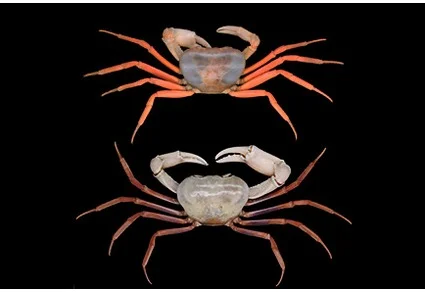
Chen, Sun and Pan (Nanjing Normal University) describe two new semiterrestrial freshwater crabs — Tiwaripotamon laibinense and Tiwaripotamon liuzhouense — from the karst landscapes of Guangxi, China. 5 Both are identified by a combination of male first-gonopod shape, carapace characters, and Kimura two-parameter distances on mitochondrial COI. The genus Tiwaripotamon Bott, 1970 (Potamidae) now has six Chinese representatives; the two new species are named for the localities of Laibin and Liuzhou respectively. Semiterrestrial potamid crabs of southern China's karst region spend much of their time out of water, climbing stone faces and leaf litter — their relatively long, slender walking legs reflect this lifestyle. Neither species has an IUCN assessment.
A bromeliad ostracod that crossed the Pacific in a pot plant
Elpidium itapevaense Pereira et al., 2026 (Ostracoda: Limnocytheridae: Timiriaseviinae) — described from Itapeva Park in southern Brazil, but also found established in New Caledonia (Melanesia, Pacific Ocean). 6 The genus Elpidium F. Müller, 1880 — now 21 species — lives exclusively in the water held in the axils of tank bromeliads (phytotelmata), tiny personal ponds available only to animals small enough to climb the leaf sheaths. All 20 previously known species were confined to the Neotropics; this is the first Elpidium confirmed outside South and Central America. The New Caledonian population arrived via the international ornamental bromeliad trade — an unintended consequence of the global horticultural industry. The paper also redescribes E. alarconi Mesquita-Joanes et al., 2025. Describer institutions include Unisinos, UnB, Morgan State University, UFRGS, the Royal Belgian Institute of Natural Sciences, and UEM (Brazil). Not IUCN assessed.
Two new owlet moths from the Tibetan Plateau and Gansu
Chen, Saldaitis, Yakovlev, Volkova, Prozorov, and Zhou (institutions in China, Lithuania, Russia, and Germany) add two moths to the noctuid genus Parvispinia Saldaitis & Ivinskis, 2008 (Noctuidae: Xyleninae: Xylenini): 7
- Parvispinia clavata sp. nov. — from Xizang (Tibet)
- Parvispinia dellabrunnai sp. nov. — from Gansu
Both are compared against all previously known Parvispinia. The paper also provides a new western collection locality for P. barkama, extending its known range approximately 800 km west into northern Sichuan, corroborated by both male and female genitalia. Neither new species is IUCN assessed.
A fungus-eating rove beetle from Mexico's volcanic belt
Oxyporus amigo Navarrete-Heredia & Reyes-Hernández, 2026 (Coleoptera: Staphylinidae: Oxyporinae) — from Jalisco and Michoacán in western Mexico, in the Trans-Mexican Volcanic Belt region. 8 Oxyporines are mycophagous (fungus-feeding) rove beetles; adults and larvae live within fruiting bodies of large basidiomycetes and can be locally common where shelf fungi and boletes are abundant. Males of the genus carry conspicuous horn-like projections on the head — a striking departure from most of the Staphylinidae, which are unornamented. This article is open access (CC BY). The paper also records O. mexicanus Fauvel, 1865 for the first time from Aguascalientes state. Describer affiliations: Universidad de Guadalajara; Instituto de Ecología, Xalapa. Not IUCN assessed.
Three ichneumonid wasps in Vietnam — two genera new to the Oriental region
A. Varga (Schmalhausen Institute of Zoology, Kyiv) described three new parasitoid wasps from Vietnam, all belonging to the subfamily Orthocentrinae of Ichneumonidae: 9
- Aniseres brevicauda sp. nov. — first record of the genus Aniseres Förster, 1871 from the Oriental region
- Aniseres vietnamensis sp. nov. — second Aniseres from Vietnam in the same paper
- Pantisarthrus orientalis sp. nov. — first record of Pantisarthrus Förster, 1871 from the Oriental region (previously known only from the western Palaearctic and the Neotropics)
Orthocentrinae are hyperparasitoids — they parasitise the larvae of other parasitoid wasps, particularly those that develop inside fungus gnats and other Diptera. Finding two formerly Palaearctic/Neotropical genera in Vietnam more than doubles the known range of each and suggests that sampling effort in Southeast Asian forests has been thin rather than that the fauna was genuinely absent. None of the three new species is IUCN assessed.
Two tiny beetles from Okinawa and eastern China
Cephennodes (s. str.) pseudoakane Jałoszyński, 2026 (Coleoptera: Staphylinidae: Scydmaeninae: Cephenniini) — from Ishigaki-jima and Iriomote-jima, the Yaeyama Islands in Okinawa Prefecture, Japan. 10 Scydmaeninae (ant-like stone beetles) are sub-millimetre to 2-mm predators of mites and other microarthropods in leaf litter and soil. C. pseudoakane joins the C. taurus species group, which now has 15 members distributed across Japan, China, Taiwan, and Vietnam; its closest look-alikes are three Taiwanese and Okinawan congeners. Diagnostic character: unique modifications of the frontal region of the male head. Describer affiliation: Museum of Natural History, University of Wrocław (Poland). Not IUCN assessed.
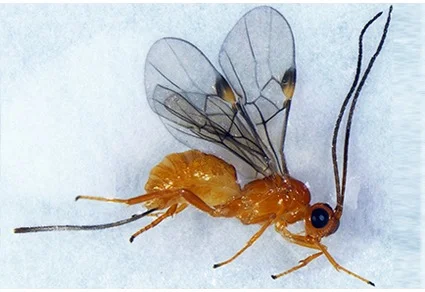
Syntomernus ningbonensis Zhang, 2026 (Hymenoptera: Braconidae: Braconinae) — from the Ningbo area of eastern China, where it parasitises cynipid gall wasps (Cynipidae) that form galls on Rosa multiflora leaves. 11 Adults emerge from the host galls between late July and early October; typically 3–5 adults of this species emerge from a single gall — a gregarious endoparasitoid strategy. Phylogenetic placement based on COI sequences. The paper also proposes S. garugaphagae (Ranjith & Quicke, 2016) comb. nov. Describer affiliations: Ningbo University; Zhejiang University. Not IUCN assessed.
MycoKeys 134: two new boletes from Guizhou
Xu X-H., Mo X., and Zhang W-P. (Kunming Institute of Botany, Chinese Academy of Sciences) describe two new Sutorius boletes from the same locality in Guizhou Province — Yuxizhen village, Daozhen County, Zunyi City — in a single MycoKeys paper built on morphology and a four-gene molecular dataset (nrLSU, nrITS, TEF1-α, RPB2). 12
The genus Sutorius Halling, Nuhn & Osmundson (Boletaceae) currently contains 29 species globally, with 17 known from China; Southeast Asia is the diversity hotspot. Both new species fruited under mixed forest at roughly 1,180 m elevation in August–September 2019 and are lodged as holotypes HKAS151561 and HKAS151559 in the Herbarium of Cryptogams at the Kunming Institute of Botany.
Sutorius yuxiensis X.H. Xu, X. Mo & W.P. Zhang, sp. nov. — cap 40–65 mm, convex, yellow-brown (Munsell 7D6), surface densely pruinose with irregular blotches; stipe 40–60 × 15–20 mm, club-shaped to cylindrical, purple-grey (18D2) with purplish-brown (10E3–4) granular scales. Spores (10.49–14.90) × (3.26–5.40) µm, narrowly ellipsoid to subcylindrical, Qm = 2.93. Phylogenetically sister to S. obscuripellis and S. ubonensis, distinguished from both by smaller cheilocystidia and the presence of pleurocystidia (which S. obscuripellis lacks). 12 Not IUCN assessed.
Sutorius rubropurpureus X.H. Xu, X. Mo & W.P. Zhang, sp. nov. — cap 40–80 mm, hemispherical, initially red-purple (13E5–6) fading to purple-grey or brown with age; stipe 30–50 × 10–20 mm, cylindrical, reddish-brown with greyish-white granular scales. The specific epithet rubropurpureus (rubro- + purpureus: red + purple) describes the distinctive fruiting body colour. Spores (9.90–15.20) × (3.60–5.50) µm, subfusoid, Qm = 2.86. Phylogenetically clusters with S. rubinus but differs in having pleurocystidia (which S. rubinus lacks) and distinct cap colour. 12 Not IUCN assessed.
Cross-posts: a Tagus toadflax and a Cretaceous planthopper in amber
Two additional species appeared on the Novataxa aggregator on June 21 — neither published within the strict 24-hour window, but both worth noting.
Linaria almadensis (Plantaginaceae: Antirrhineae) — a new toadflax species endemic to the cliffs along the Tagus River estuary in Portugal, described as highly threatened. 13 Full morphological detail and the original journal citation were not accessible from the Novataxa blog post alone; the species appears in a recent systematic treatment of Iberian Linaria. Its restriction to a narrow belt of estuarine cliff habitat near Almada — urban fringe territory subject to development and recreational pressure — makes it a rare combination: a new plant species and a conservation concern simultaneously.
Cretolala kachinensis (Hemiptera: Fulgoromorpha: Delphacoidea: Lalacidae) — a new planthopper preserved in mid-Cretaceous Kachin amber from Myanmar, representing the first lalacid record from Kachin amber and extending the family's fossil history. 14 Kachin (Burmese) amber dates to approximately 99 million years ago and is one of the richest Cretaceous arthropod deposits known; many hemipteran lineages present in modern Southeast Asian forests have been found there, though Lalacidae — a small, mostly Australian family — had not previously appeared in the deposit. Original journal details were not available from the Novataxa aggregator entry.
Conservation status at a glance
| Species | Group | Locality | IUCN status |
|---|---|---|---|
| Nadzikambia franklinae | Reptilia: Chamaeleonidae | Mount Namuli, Mozambique | Critically Endangered |
| Nadzikambia goodallae | Reptilia: Chamaeleonidae | Mount Ribáuè, Mozambique | Critically Endangered |
| Nadzikambia evanescens | Reptilia: Chamaeleonidae | Mount Inago, Mozambique | Critically Endangered |
| Nadzikambia nubila | Reptilia: Chamaeleonidae | Mount Chiperone, Mozambique | Critically Endangered |
| Scymnus tshunsii | Coleoptera: Coccinellidae | Thailand (Chiang Mai, Nakhon Ratchasima) | Not evaluated |
| Parascytoleptus cognatus | Decapoda: Calocarididae | Madagascar, Réunion | Not evaluated |
| Tiwaripotamon laibinense | Decapoda: Potamidae | Guangxi, China | Not evaluated |
| Tiwaripotamon liuzhouense | Decapoda: Potamidae | Guangxi, China | Not evaluated |
| Elpidium itapevaense | Ostracoda: Limnocytheridae | Brazil; introduced to New Caledonia | Not evaluated |
| Parvispinia clavata | Lepidoptera: Noctuidae | Xizang (Tibet), China | Not evaluated |
| Parvispinia dellabrunnai | Lepidoptera: Noctuidae | Gansu, China | Not evaluated |
| Oxyporus amigo | Coleoptera: Staphylinidae | Jalisco / Michoacán, Mexico | Not evaluated |
| Aniseres brevicauda | Hymenoptera: Ichneumonidae | Vietnam | Not evaluated |
| Aniseres vietnamensis | Hymenoptera: Ichneumonidae | Vietnam | Not evaluated |
| Pantisarthrus orientalis | Hymenoptera: Ichneumonidae | Vietnam | Not evaluated |
| Cephennodes pseudoakane | Coleoptera: Staphylinidae | Yaeyama Islands, Japan | Not evaluated |
| Syntomernus ningbonensis | Hymenoptera: Braconidae | Ningbo, China | Not evaluated |
| Sutorius yuxiensis | Fungi: Boletaceae | Guizhou, China | Not evaluated |
| Sutorius rubropurpureus | Fungi: Boletaceae | Guizhou, China | Not evaluated |
| Linaria almadensis | Plantae: Plantaginaceae | Tagus estuary, Portugal | Highly threatened (formal assessment pending) |
| Cretolala kachinensis | Hemiptera: Lalacidae | Kachin amber (Cretaceous, ~99 Ma) | Fossil — not applicable |
Cover image: Four of the new Mozambique sky-island chameleons (Nadzikambia sp.) photographed at their type localities. Image from Tolley & Conradie 2026 / Vertebrate Zoology, CC BY 4.0.
References
- 1Tolley & Conradie 2026 — Sky Islands of Mozambique harbour cryptic chameleon species, Vertebrate Zoology 76
- 2Pensoft Blog — Four new chameleon species found on Mozambique's mountaintop sky islands
- 3Seki et al. 2026 — First termitophilous ladybird beetle, European Journal of Entomology 123: 165–174
- 4Komai & Anker 2026 — Redescription of P. tridens and new species, Zootaxa 5837.1.2
- 5Chen, Sun & Pan 2026 — Two new Tiwaripotamon from Guangxi, Zootaxa 5837.1.5
- 6Pereira et al. 2026 — Neotropical Elpidium introduced into New Caledonia, Zootaxa 5837.1.1
- 7Chen et al. 2026 — Two new Chinese Parvispinia, Zootaxa 5837.1.6
- 8Navarrete-Heredia & Reyes-Hernández 2026 — New Oxyporus from western Mexico, Zootaxa 5837.1.7
- 9Varga 2026 — First records of Aniseres and Pantisarthrus from the Oriental region, Zootaxa 5837.1.8
- 10Jałoszyński 2026 — New Cephennodes taurus group, Zootaxa 5837.1.9
- 11Zhang 2026 — New Syntomernus from China, Zootaxa 5837.1.10
- 12Xu, Mo & Zhang 2026 — Two new Sutorius from Guizhou, MycoKeys 134: 275–290
- 13Novataxa — Linaria almadensis, new toadflax from Tagus mouth cliffs
- 14Novataxa — Cretolala kachinensis, first lalacid from Kachin amber
Add more perspectives or context around this Post.